Is there a “kitchen black hole” in your home? You know the one—you push things to the back of a deep cabinet to clear the counter, only to rediscover them years later, dusty and expired. Deep kitchen cabinets are often hailed as the most challenging areas to organize in any home.
Statistics show that the average deep cabinet space utilization is often below 50%. The traditional method of stacking items in the dark abyss leads to frustration, duplicate purchases, and wasted groceries. The problem isn’t the depth of your cabinets; it’s the strategy.
Why Deep Kitchen Cabinets Are Hard to Organize
Before we fix the problem, it helps to understand why deep cabinets fail so often:
Items Get Lost in the Back
It is the classic “out of sight, out of mind” scenario. Small appliances, specialty pans, and bulk food items get pushed to the rear and are forgotten until a deep clean unearths them.
Poor Visibility
When you have to pull out five items to reach the one behind them, you create mess. This constant “cabinet archaeology” discourages you from using those items, leading to space waste.
Accessibility Problem
Simply put, human arms are not long enough to comfortably reach the back of a 24-inch deep cabinet while rummaging past a stack of mixing bowls.
Step 1 — Empty and Categorize Cabinet Items
Sort your items into three distinct piles on your counter or table:
- Daily use items: Things you reach for every morning or evening.
- Weekly use items: Baking sheets, mixing bowls, or specialty gadgets.
- Rarely used items: The holiday platter, the turkey roaster, or the juicer you use twice a year.
Step 2 — Use Pull-Out Storage Solutions
This is the most critical step in your organization journey. If you try to organize a deep cabinet with static stacking, you will fail. You need motion. Pull-out storage systems are the only way to transform a deep, static box into functional, drawer-like access.
Here are the most effective pull-out solutions for modern kitchens:
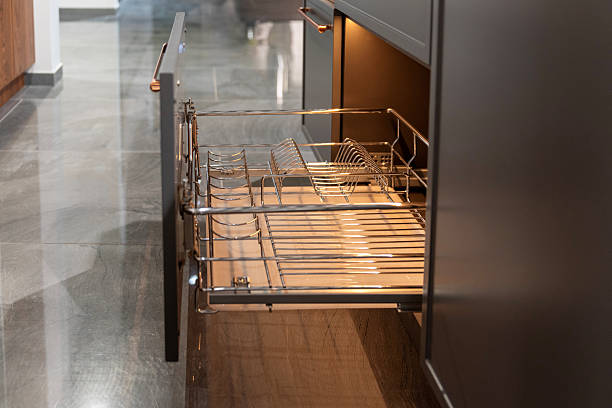
1. Pull-Out Drawer Organizer
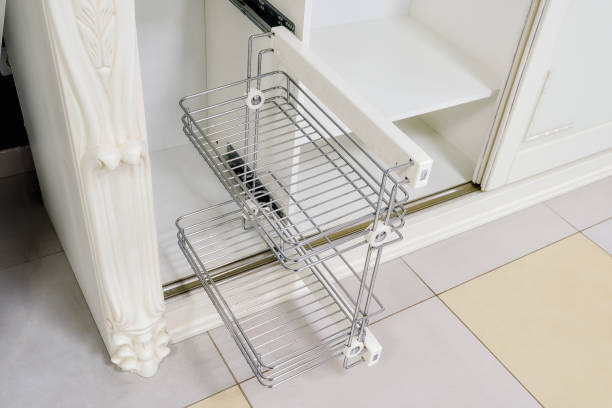
Perfect for base cabinets, these install on the floor of your cabinet and slide out smoothly.
- Best for: Plates, bowls, pots, pans, and small kitchen gadgets
- The Advantage: They utilize the full extension of a slide rail, bringing the very back of the cabinet right to your fingertips. No more bending over to dig.
2. Under Sink Pull-Out Organizer
The area under the sink is perhaps the most challenging space due to plumbing. Standard shelves don’t work. Specialized units are required.
- Best for: Cleaning supplies, sponges, dishwasher detergent, and trash bags
- Design Advantage: Look for a U-shaped or L-shaped pull-out organizer specifically designed to fit around the P-trap and plumbing -3. These units maximize vertical space that is otherwise dead air.
3. Tall Cabinet Pull-Out Storage (Pantry)
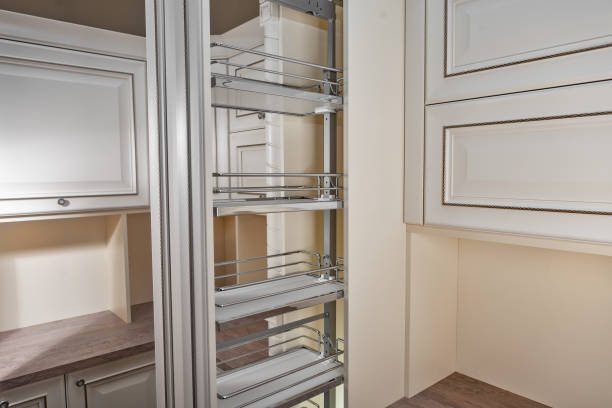
If you have a deep pantry cabinet, pull-out solutions are non-negotiable.
- Best for: Dry goods, canned foods, spice jars, and oils.
- Efficiency: Multi-tiered pull-out baskets allow you to see everything at a glance. You can label bins for specific categories, making meal prep faster.
4. Corner Cabinet Organizer
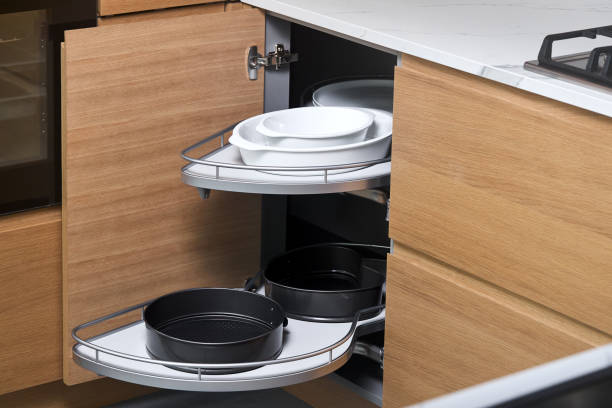
Corner cabinets are the ” Bermuda Triangle” of the kitchen. Standard shelving makes the corner impossible to reach.
- The Solution: A blind corner pull-out organizer or a magic corner system uses a synchronized mechanism. When you open the door, the shelves swing or pull out toward you, bringing hidden items into view. These systems are engineered to make use of every square inch.
Step 3 — Store Items According to Usage Frequency
Once your pull-out hardware is in place (or even if you are using bins temporarily), apply the “Golden Rule of Deep Cabinet Storage.”
- Front Layer (Access Zone): Place your Daily items here. Coffee, daily vitamins, cooking oils, and the pan you use every morning.
- Middle Layer (Reach Zone): Store Weekly items here. Baking sheets, mixing bowls, and the air fryer basket.
- Back Layer (Storage Zone): Reserve this for Rarely used items. If you store something here without a pull-out system, use a labeled bin with a handle so you can drag it forward.
Step 4 — Install Cabinet Dividers or Baskets
Even with pull-out shelves, interior chaos can happen. Items tip over when you slide the drawer back in. This is where dividers and fixed baskets help.
Why Dividers Matter
They prevent items from tipping over during the motion of opening and closing. They act as “bookends” for your categories, ensuring that once you organize, the system stays organized.
Material Matters
When choosing baskets or dividers, look for high-quality construction:
- Corrosion-resistant coating: Essential for longevity, especially under the sink.
- Durable metal structure: Carbon steel frames with chrome plating offer high durability and prevent rust (often exceeding level 8 rust resistance standards).
- Smooth sliding rail system: The hardware should glide effortlessly without sticking.
Step 5 — Choose the Right Kitchen Hardware Quality
The magic of a deep cabinet lies in the hardware you cannot see—the slides and rails. When sourcing products or buying for yourself, quality is paramount. Investing in high-quality hardware reduces long-term maintenance costs significantly.
What to look for in quality hardware:
- Load-Bearing Capacity: Ensure the slides can handle the weight of your items (e.g., 22 lbs per layer or more).
- Smooth Sliding Rails: Look for precision ball-bearing rollers that offer effortless, frictionless movement even when fully loaded.
- Anti-Rust Surface Treatment: In kitchens, humidity is the enemy. A powder-coated or e-coated finish (like powder chrome) protects the metal from moisture and corrosion.
- Soft-Close Function: This prevents the drawer from slamming shut, protecting both the cabinet and your dishes.
Common Mistakes When Organizing Deep Cabinets
Avoid these pitfalls to ensure your hard work lasts:
- Filling the cabinet to maximum capacity: It looks good empty, but if you can’t pull anything out, it’s useless.
- Using random plastic containers: Mismatched containers waste space. Use uniform bins for a cleaner look.
- Ignoring vertical space: If you only use the bottom, you are wasting the upper half of the cabinet.
- Not considering workflow: Store items near where you use them (pots near the stove, coffee near the machine).
- Buying organizers without measuring: This is the #1 reason for returns -4. Always measure twice, buy once.
How to Measure Cabinet Space Before Buying Organizers
To ensure a perfect fit for your pull-out solutions, follow this quick guide:
- Measure Width: Measure the inside of the cabinet from left to right at the front opening.
- Measure Depth: Measure from the back wall to the front frame.
- Measure Height: Measure from the cabinet floor to the top of the opening (or the shelf above).
- Check Door Opening Angle: Ensure the door opens wide enough for the slide-out mechanism to clear the frame.
- Consider Obstructions: Under the sink, map out the location of the plumbing.
Maintenance Tips for Deep Cabinet Organizers
To keep your hardware functioning like new:
- Regularly clean sliding rails: Wipe away crumbs and grease that can build up and cause friction.
- Avoid overloading: Respect the weight limits of your baskets and slides to prevent warping.
- Keep moisture away: Wipe up spills immediately to protect metal hardware from rust.
Conclusion
Deep kitchen cabinets are not the problem. Poor organization and the wrong storage tools are the real issues. By implementing pull-out systems, categorizing items by frequency, and insisting on high-quality hardware, you can turn your deepest cabinets into the most efficient storage in your kitchen.